The phone rings at 1:12 a.m. A storage facility manager whispers that intruders hit their boundary once more, third time in two months. I draw on boots and clear out. Moonlight makes every panel shine. Footprints arc towards an edge braced by a Dumpster. The thieves made use of the bin as an action, climbed a worn out chain web link, and mored than the crest prior to the safety lights completely warmed up. By sunup, we had a plan on the table that would certainly make that climb feel like attempting to shimmy up glass.
Anti-climb job rests at the lively crossway of physics, psychology, and dirt-under-the-nails craft. You want a barrier that claims no with confidence, delays the relentless, brushes off climate, and still looks like it belongs. You desire a Fencing Contractor who asks what sort of intruder you have, not simply exactly how high you wish to go. The right answer is never ever one item. It is a layout, tuned to your site, installed with treatment, and examined the way a mountaineer checks harness and rope before taking a route.
What we are really stopping
A climber comes in tastes. The bored teenager who treats a college lawn like a parkour program. The opportunist who sees copper piled five paces inside the fence. The determined intruder who scouts cams, counts patrols, and brings a ladder tucked under a tarpaulin. Each type pressures different choices.
Teens are light, fast, and drawn to test. A fence that resembles an attempt will be climbed. Opportunists go after speed. If cresting the line takes greater than 10 secs, many stopped. Identified stars have time and tools. They do not mind cuts or scrapes. Versus them, you require a system that stacks deterrence, delay, and detection.
So of course, elevation issues, but it is not whatever. The surface area, the apertures, the angles, the ground, the gate lines, and the top rail all tell a story. Create that story plainly and your border will certainly really feel taller than it is.
The design principles that never fall short us
Every fencing we build for anti-climb obligation leans on a handful of concepts we can evaluate with gloves and a stopwatch.
- Limited acquisition factors. Human hands and sneaker soles need holds. If a fingertip can not enter an aperture and a toe can not find a rack, you win inches with every panel. Vertical bias. Vertical bars or dense vertical mesh lug gravity as your ally. Straight imprison the climb zone make ladders out of your fence. Smooth and unrelenting crest. A top that rolls or surges deters grip and saps self-confidence. Foreseeable pain is persuasive. Clean approach and touchdown zones. A tree limb, stone, or bordering structure can turn a safe fence right into a stairs. We clear, change, or guard them. Anchored base and hidden defense. If it can be raised, reduced at the bottom, or tunneled under in mins, it will certainly be. A safe and secure fence gets to below grade and respects dirt realities.
Mesh that works, and why aperture size is not trivia
Contractors love 358 mesh for a factor. It is the workhorse of anti-climb: 3 inches by 0.5 inch apertures, bonded signs up with, heavy scale cord. Most grownups can not get fingertips with it. The limited weave also deals with bolt cutters. When we speak with a Fence Company regarding risk rates, 358 lives in the "severe border" tier.
Variants like 3510 or 868 pairs (6 mm upright, 8 mm horizontal) appear at sporting activities locations or institutions where visibility and impact resistance still matter. You get rigidness and a tidy look, lose a little bit of anti-cut stamina contrasted to 358, but also for numerous noncombatant contexts, that profession is fair.
Chain web link prevails, fast to set up, and inexpensive per foot. As a Fencing company, we hardly ever spec common chain link for anti-climb without add-ons. It has big apertures, lots of toe holds, and flex that can assist a climber. If a budget needs chain link, we tighten mesh size, include a smooth bottom rail, shield mid rails, and completed with a hostile top treatment.
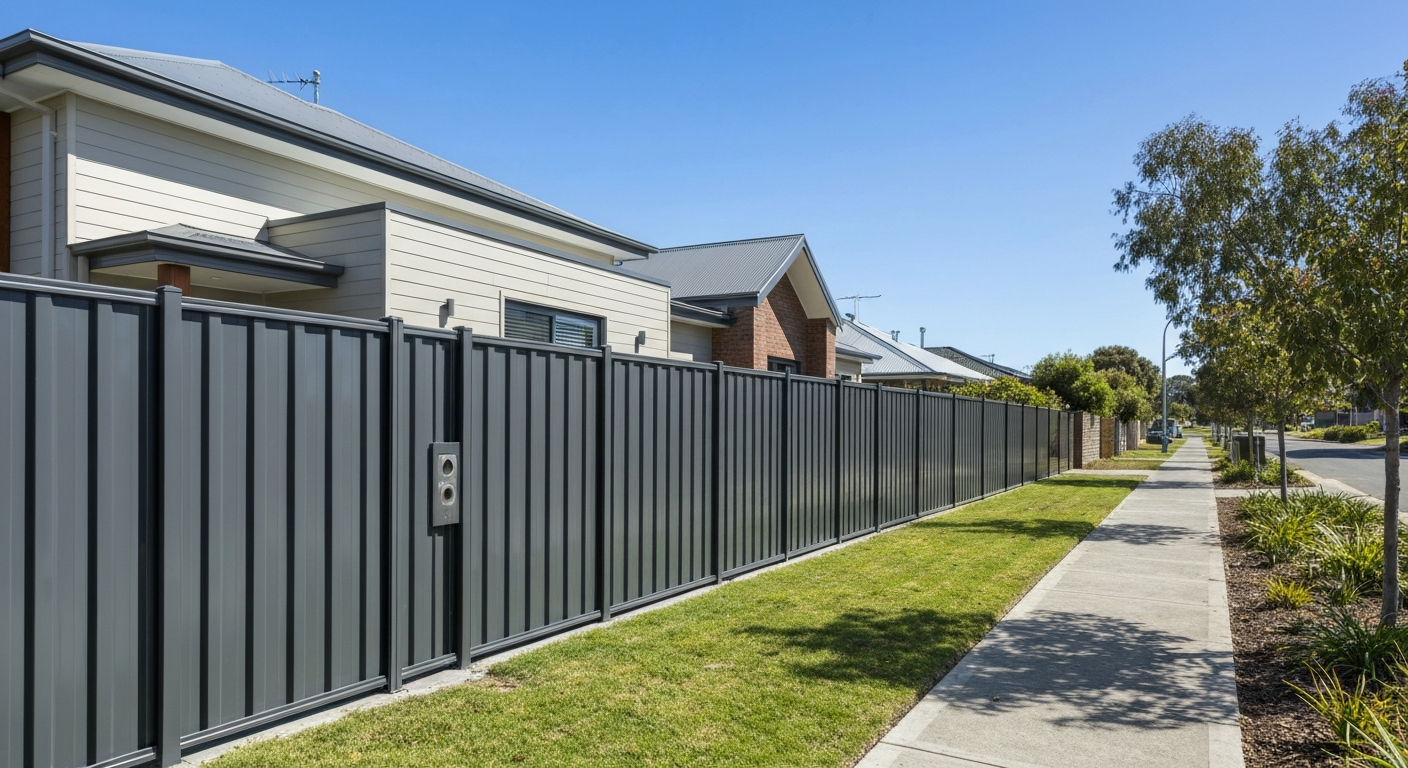
Timber looks warm, assists with planning approvals near property roads, and can be a strong no-climb when done right. The trick is avoiding horizontal rails at mid-height and using flush boards to get rid of spaces. Dealt with wood slats on steel frames with hidden bolts offer a tidy, level face that denies acquisition. The incorrect lumber format, though, develops into a stairs by year 3 when boards shrink and correctings loosen.
Palisade, vertical bar, and why account forms matter
Steel palisade fencings earn regard in commercial yards. D-profile fades with anti-tamper mendings resist impact, and their sharp crests encourage. We such as trip-rail complimentary arrangements to maintain the climb zone deprived of steps. For public setups, vertical bar systems with close bar spacing and a smooth top rail look public and really feel safe. Arched tops or dome heads maintain the eye kicked back while refuting handholds.
Profile shape changes the game more than the majority of customers anticipate. A flat bar bends. A D-profile deflects force. A hollow tube includes rigidity for less weight. We deal with a fencing installer who advocates an oval vertical for waterfront jobs, because it slices wind and loses salt much better while keeping bars too close for toes.
The crest: where climbs up start and end
A fence without an appropriate crest is a wall surface with a pleasant handshake. Pick your finish by risk, law, and neighbors.
- Roller barriers. Rows of smooth turning mugs transform grip into failing. They are solid deterrents for colleges and energies, reviewed as non-lethal, and are legal in most locations with signage. Spiked tops. W-spikes or triads say shut out with conviction. We fit these on logistics websites and rail hallways. Lawful conformity and warning signs matter here, and we select heights that restrict unexpected harm. Razor or concertina coils. Reliable against figured out trespassers, yet heavy on upkeep and optics. Many jurisdictions restrict them near public locations. Usage just where policy and context justify the look and the risk. Angled expansions. A 45-degree outward lean swipes the last grip. Integrate with mesh that proceeds into the angle so the expansion does not become a straight step.
I have actually climbed up demo sections in our backyard with and without crests. Without a leading treatment, even 8 feet of great mesh really feels possible with calm perseverance. Add rollers or a slick 45-degree extension and your lower arms flood by the time you recognize there is nowhere to plant weight.
Anti-climb paint and surface area tricks
Non-drying, bituminous anti-climb layers are traditional and efficient within their particular niche. Applied above 7 feet with clear signage, the paint remains gaudy, spots clothing, and ruins grip. We utilize it sparingly on drainpipes, signposts near climbable wall surfaces, and on the back face of downpipes adjacent to fences. It does not replace excellent design, but it turns low holds right into messy regrets.
On smooth panel fencings, we define powder coats with low surface area friction. Gloss beats textured for anti-climb, also if satin hides scuffs better. In coastal air, a duplex system, galvanizing plus powder layer, defend against rust that can construct tiny footings along weld lines.
The ground is not simply ground
The best anti-climb strategy is sunk in concrete where it counts. Requirement method sees messages set 2 to 3 feet deep, with depth tuned by frost line and dirt course. For greater risk perimeters, we put continuous quality beam of lights or mount a precast plinth in between posts. That does 4 jobs at once: stops pets or individuals from scooping under, keeps plant life off the fence line, offers a clean mowing strip, and tenses the panel run versus racking loads.
On hillsides, stepping panels leaves triangulars under the low corners. Those are tunnels-in-waiting. We fill them with cut plinth items, bonded sheet, or site-formed concrete. In sandy dirts, we widen footings and add tie bars to withstand wind set. On rock, we core drill and epoxy in rebar dowels, after that build a concrete pad that links every article into a single stubborn line.
Gates: the soft underbelly
Most violations happen at gateways, not panels. A great fencing with a careless entrance is like a secured door with a rotten jamb. We develop for the gate first.
Heights have to match crest to crest. If the fencing runs rollers, the gate requires rollers that line up in both fallen leave and structure. Spaces at the hinge stile and latch stile ought to be limited enough that a hand can not snake via to get to a latch or mag lock. We make use of shrouded hinges, anti-lift pins, and keep lower voids as tiny as the surface enables without snagging winter heave or website debris.
Electric strikes, mag locks, and keypad housings invite tampering if installed where a screwdriver fits. We back them with anti-climb cowls and relocate reader heads to secure reach heights on protected articles. For gliding gates, we secure shelf gears and keep rollers unreachable from the outside face. Every cord runs in steel avenue. Every box makes use of safety screws that bite deep and stand up to usual bits.
Terrain, trees, and the things you can not move
More tasks are won or shed at the site stroll than at the spec table. On one work, an oak branch arced over the fence like a pleasant arm. Children were dropping in from the next-door neighbor's lawn making use of the tree. We trimmed back to code, after that installed a rolling top that sat below the branch's least expensive seasonal swing, guaranteeing no brand-new holds created when leaves consumed alcohol summer rain.
Rocky sites require imagination. You will certainly not trench a cool line through fractured shale. We scale fencing heights to align with the ordinary grade, after that add customized base plates epoxied to drilled supports. Where gutters pass under, we install welded grates with the very same mesh as the fence and a lockable hatch for maintenance. Wildlife hallways sometimes need increased flows. In those situations we develop angled chutes with brush screens that let animals via yet maintain two-legged traffic out.
A field-tested website assessment checklist
Identify exterior aids within 8 feet of the fencing line, including trees, walls, light poles, and devices that can be moved to the line. Map grade modifications and dirt kinds along the run to plan footing depths, plinths, and panel stepping. Log public-facing edges and neighbor sightlines to calibrate visual appeals, crest selections, and signage. Pinpoint high-value targets inside the border and plan direct strike points, specifically entrances and corners. Audit source of power, camera protection, and lighting so the fence supports discovery, not just delay.This five-step pass turns obscure risk conversations right into workable drawings. Every Fencing Contractor on our group runs it before estimating, because shocks on day 2 of mount price ten times more than thoughtful planning.
Case notes from the field
At a port-side metals yard, thieves were climbing up a 7-foot chain link, kicking in the mid rail to make a step, and after that dropping to the within with hefty gloves. We replaced the line with 358 mesh at 8 feet, included a 45-degree outward extension with the exact same mesh, and put a constant concrete plinth. The Dumpster that had actually been parked along the fence obtained a steel cage with a hinge and hasp, so it can not be rolled right into place as a ladder. Break-ins dropped by roughly 80 percent over the next year. The staying attempts ended with impacts and nothing missing.
A middle school desired protection without appearing like a prison. We utilized vertical bar panels, 6 feet 6 inches high, with bar centers as well tight for toes, curved tops that read friendly, and rolling crests hidden behind the arc line. Drains on close-by structures got anti-climb paint over reach height. Children attempted. Tennis shoes smeared. Teachers smiled.
A data center demanded no concessions. We developed a two-fence system: external 358 with rollers and microphonic wire for discovery, inner palisade with anti-tamper fasteners, plus a 10-foot clean and sterile zone in between, all lit with white light at 20 lux. Every gateway had twin mag locks and monitored contacts. licensed residential contractor It was pricey. It also got rid of border breaches while moving safety initiative to controlled accessibility points where human testing functions best.
Budget, overall price, and where to invest the following dollar
Budgets shape options. It is better to do one stretch properly than to sprinkle half-measures across a perimeter. If you need triage:
- Fix evictions, joints, and locks initially. It is the cheapest way to shut the most significant hole. Remove climb help. Relocate containers, trim trees, relocate sheds that kiss the fence. Improve the crest on existing lines. Rollers or tilted expansions frequently bolt onto existing posts. Reduce aperture size. Add inner mesh to chain link in at risk zones. Add lights and electronic cameras intended to sustain the fence. Discovery plus delay is multiplicative.
Lifecycle expense issues as high as very first cost. Chain relate to razor wire looks cheap theoretically, then the wind unzips coils, indicators go missing, and a fence installer sees three times a year for patch tasks. A well covered 358 system will rest for a years with yearly checks and a fast touch-up set. A Fence Company that tracks call-backs understands where your money actually goes.
Hardware and fasteners that keep promises
Panels stop working where they fulfill articles. We make use of safety and security shear nuts, Torx with facility pins, and in high-risk locations, rivet nuts or Huck-style fasteners that can not be backed out. On palisade, we specify cup square bolts with anti-spin cups plus string lock. Torque matters. A loose bolt is a future rung. We do last passes with calibrated wrenches and mark heads with paint for aesthetic assessment later.
Beware of mixing stainless bolts with galvanized steel without isolators. Galvanic rust will chew through hardware in seaside air. Nylon washers, proper coverings, and matched materials maintain the chemistry calm.
Legal and liability notes you can not ignore
Anti-climb features live near the boundary in between protecting residential property and producing threats. Regulations vary by state and town. As a Fencing Contractor, we maintain data of regional statutes on fencing elevation, barbed cable, and what can face a public pathway. Indication are inexpensive insurance policy. In some areas, anti-climb paint calls for signs to prevent liability. Spikes over a particular height might be restricted within residential zones. If your boundary guards a public path, we take into consideration rounded profiles or roller barriers as opposed to sharp spikes, and we verify clearances for emergency egress.
Emergency responders need to be able to get in. Knox-style crucial boxes, strobe-activated entrances, and published contact numbers keep firemans from reducing a beautiful fencing at the hinge line. We additionally think about wild animals. If your residential property abuts a secured passage, consult conservation police officers. We have actually raised bottom rails in defined sections and added brush screens to enable fox and bunny passage while denying human crawl space.
Maintenance: small habits, large returns
Anti-climb performance erodes in quiet means. A vine locates a seam, and 3 summers later on it is a green ladder. Wind works a loosened hinge till the gap will feed a hand. A wintertime of salt sprinkles opens a corrosion blossom at a weld.
We coach facility groups to do seasonal passes. Rinse salts and grime, cut back greenery a minimum of 18 inches from the face, check that safety and security screws still birth paint marks aligned with blog posts, and examination entrances for tidy closing. Change any type of broken rollers promptly, due to the fact that one missing area welcomes penetrating. If anti-climb paint was utilized, reapply very finely where dust or sun has set the film.
Common missteps and how to guide clear
The most constant mistake is confusing elevation with protection. An 8-foot chain relate to mid rails and a friendly Dumpster is much less safe than a 6-foot upright bar with a rolling top and tidy approach. Following is ignoring the gate. A great fence with a padlock-strung chain as a lock is a present to intruders. One more is thoughtless aesthetic appeals. If your website fronts a residential block, a brutal fence draws fights at intending evaluation. A Fencing company with style sensitivity can maintain neighbors in your corner without softening security.
Finally, do not screw an elegant crest on an unsteady line. Posts should be plumb, set deep, and supported for wind. A roller system adds sail location and utilize. If the base is marginal, the initial tornado will certainly make a mockery of your budget.
Two vigorous scenarios that make judgment visible
A boutique brewery needs to keep night wanderers off a riverside outdoor patio. They also host family members on weekends and want a look that fits their brand. We advised vertical bar panels, 5 feet 6 inches high, tight spacing, a smooth bent top, and a small roller hid behind the curve. We ran a reduced gabion wall surface below as a flood-friendly base. It checks out like craft style and resists idle climbs.
A little energy substation near an institution had a lightweight chain web link and signs that youngsters had actually been over the top. We mounted 358 mesh at 8 feet with an external 30-degree expansion, equipped rollers, treated close-by energy posts and drains with anti-climb paint above the 7-foot line, and cleansed the technique zone. We added a camera aimed across the fencing to capture loitering prior to a climb. That mix of deterrence and early warning fulfills utility standards without souring relations with the school.
Working with the ideal hands
Choose individuals, not just products. Try To Find Fencing Contractors who inquire about risk profiles and upkeep resources, not just footage and elevation. A capable Fence Company will bring illustrations that reveal gate details, crest changes at edges, base treatments on slopes, and fastener routines. They will understand local guidelines on spikes and cord. They will have a fencing installer on team who has cut knuckles in the rain and found out which fixings back out after a year near the sea.
Ask for examples within 10 miles of your site. Touch a panel they built last year. Is it still limited to the blog post? Are rollers aligned? Exist scuff marks where toes attempted and stopped working? Great Fence Contractors can explain their options in ordinary language. They do not hide behind jargon or throw magazine pages at you. They will additionally tell you when a less costly, smarter relocate beats a grander spec.
The experience is in the details
Anti-climb job is half engineering, half respect for humanity. You construct a course of many resistance, you cut off the stroke of luck, and you make climbing up feel silly before it begins. Then you mount with care that reveals. Your fence is a line in the landscape that states this is ours, and we indicate it. With the appropriate Fencing Contractor as your companion, the ideal fencing installer on the devices, and a style that listens to your website, that line will certainly hold.
When the following twelve o'clock at night telephone call comes, it needs to be about a cam that captured someone looking, after that leaving, hands left tidy, pockets left empty, and your night left quiet.